
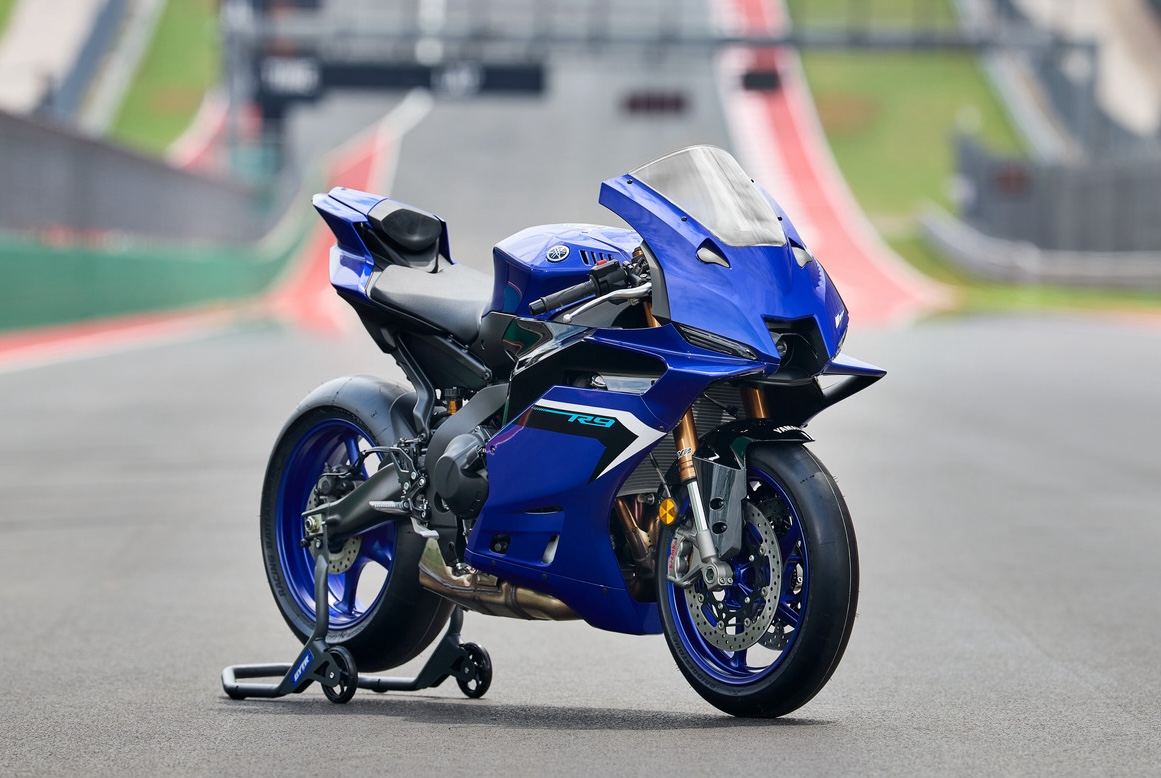
Yamaha R9: The Legend Reborn
Introduction
Remember the scream? The unadulterated, visceral thrill of pinning the throttle on a lightweight, responsive machine that just begged to be pushed harder? For a generation of riders, that scream belonged to the Yamaha R6. But legends, like all things, evolve. Now, whisper it… the R9 is here.
Forget the sterile press releases and the endless spec sheets for a moment. Let’s talk about feeling. Let’s talk about the void left by the R6, a void that’s echoed in the hearts of riders craving that perfect balance of agility, power, and connection with the road. Yamaha knows this. We know this. And that’s why the rumors, the whispers, the spy shots… they’ve all crescendoed into a near-certainty: the R9 is coming, and it’s poised to reignite the middleweight sportbike segment.
But is it just about nostalgia? No way. This isn’t about resurrecting a ghost. This is about building something new, something that leverages the lessons learned and the technology advanced to create a machine that’s both thrilling and relevant in today’s riding landscape.
The R6 Legacy: A Double-Edged Sword
The R6, in its prime, was a marvel. A high-revving, razor-sharp scalpel designed for apex hunting. It was a track day weapon, a canyon carving companion, and a poster child for the golden age of 600cc sportbikes. But its laser focus came with a price. Its peaky powerband, while exhilarating at full tilt, could be demanding in everyday riding. It was a machine that required commitment, a machine that didn’t always play nice in traffic.
The disappearance of the R6 from Yamaha’s lineup left a noticeable gap. Suddenly, there was a chasm between the R7, a fantastic machine in its own right but more road-focused, and the fire-breathing R1. Riders yearned for something in between, something that offered a taste of R-series aggression without sacrificing real-world usability.
The Short-Term Sting:
- Lost Sales: Yamaha was undoubtedly missing out on sales to competitors offering compelling middleweight sportbikes. Riders who wanted a sporty experience but found the R7 too tame and the R1 too extreme simply went elsewhere.
- Brand Loyalty Erosion: Over time, the absence of a true R6 successor could chip away at brand loyalty. Riders might switch brands in search of a suitable middleweight, potentially leading to further purchases within that brand’s ecosystem.
The Long-Term Echo:
- Diminished Track Presence: The R6 was a staple at track days and racing series around the world. Without a direct replacement, Yamaha risked losing its dominance in these environments, impacting its image as a performance-oriented brand.
- Skill Progression Barrier: For many riders, the R6 served as a crucial stepping stone between entry-level bikes and larger, more powerful machines. The lack of a comparable model could make the jump to a liter-class bike seem even more daunting, potentially hindering skill progression.
The R9 Solution: Bridging the Gap
Enter the R9. While details are still shrouded in secrecy, the rumors point to a potent 889cc CP3 engine, the same powerplant found in the wildly popular MT-09. This engine offers a completely different riding experience than the R6’s high-strung inline-four. It boasts a broad, usable torque curve that delivers punchy acceleration across the rev range. This means less frantic gear changes, more immediate power, and a more engaging riding experience in a wider range of situations.
Practical Solutions and Approaches:
- Leveraging the CP3 Engine: This is the heart of the R9’s potential. The CP3 engine provides a sweet spot between raw power and everyday usability. Yamaha could further refine the engine mapping specifically for the R9, optimizing it for sportbike performance while retaining its user-friendly character.
- Example: Consider the Triumph Street Triple. Its triple engine delivers a similar blend of torque and power, making it a highly versatile and enjoyable machine both on the street and the track. The R9 could emulate this approach.
- Chassis and Suspension Fine-Tuning: The chassis and suspension will be critical in defining the R9’s character. Yamaha should aim for a lightweight, agile chassis that inspires confidence in corners. Adjustable suspension components would allow riders to fine-tune the bike to their individual preferences and riding styles.
- Case Study: The Aprilia RS 660 is a prime example of how a well-tuned chassis and suspension can transform a middleweight sportbike. Its playful handling and confidence-inspiring stability have earned it rave reviews.
- Electronics Package: A modern electronics package is essential for any sportbike in this day and age. Traction control, multiple riding modes, and a quickshifter should be standard features. Yamaha could also offer optional upgrades such as cornering ABS and lean-sensitive traction control for even greater levels of safety and performance.
- Example: The Kawasaki Ninja 650, while not a direct competitor to the R9, demonstrates the value of a well-integrated electronics package. Its rider aids enhance safety and control without feeling intrusive.
Alternative Approaches:
- A More Track-Focused R9 (R9M?): Yamaha could offer two versions of the R9: a standard model for street riding and a more track-focused “R9M” with premium suspension, lightweight wheels, and other performance-enhancing upgrades.
- A Retro-Inspired Design: Yamaha could tap into the nostalgia for the R6 by incorporating retro styling cues into the R9’s design. This could appeal to riders who fondly remember the R6 while also attracting new riders who appreciate classic aesthetics.
- Partnerships for Performance Parts: Collaborate with aftermarket manufacturers to develop a range of performance parts specifically for the R9. This would allow riders to further customize their bikes and unlock even greater performance potential.
Conclusion: A New Chapter Begins
The Yamaha R9 represents more than just a new motorcycle; it’s a statement. It’s a declaration that Yamaha is committed to the middleweight sportbike segment and to providing riders with machines that are both thrilling and accessible. The R9 has the potential to not only fill the void left by the R6 but also to redefine what a modern middleweight sportbike can be.
The wait is almost over. The whispers are getting louder. Get ready. The legend is reborn. The R9 is coming, and it’s poised to rewrite the rules. It’s time to dust off your leathers, sharpen your skills, and prepare for a new era of middleweight sportbike supremacy. The future of fun is on the horizon, and it’s wearing the Yamaha badge. Get ready to ride.