
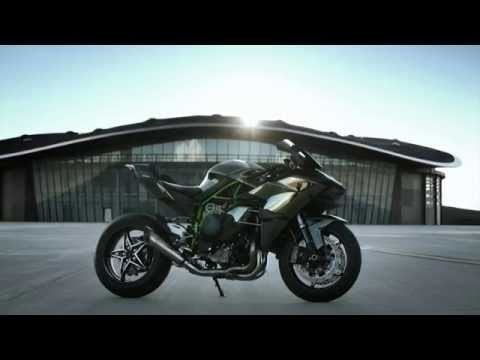
H2R: Beyond Hypersport, Beyond Belief
Introduction
Okay, let’s talk about a legend. A myth. A mechanical marvel that redefined what we thought was possible on two wheels. We’re talking about the Kawasaki Ninja H2R. Forget your run-of-the-mill sportbike; the H2R exists in a different dimension, a place where the laws of physics are politely ignored.
But why all the hype? Is it *just* a fast bike? Absolutely not. The H2R is a statement. A technological showcase. A glimpse into the future of motorcycle engineering. It’s an exercise in “what if?” pushed to its absolute limit.
Think about it. Supercharged motorcycles were largely relegated to the history books, a quirky footnote in the evolution of internal combustion. Then Kawasaki, seemingly out of nowhere, drops this carbon-fiber-clad bombshell, boasting a supercharger screaming its lungs out, pushing out over 300 horsepower. It wasn’t just a bike; it was a gauntlet thrown down to the entire industry.
Short-Term Thrills, Long-Term Tremors
The immediate impact was obvious: sheer, unadulterated speed. Videos flooded the internet of H2Rs obliterating racetracks and leaving even the most seasoned riders speechless. This wasn’t just acceleration; it was *warp speed*. The H2R instantly became a symbol of extreme performance, attracting attention from gearheads, racers, and anyone who craved the ultimate adrenaline rush.
But the long-term impact is far more profound. The H2R’s existence has shaken the foundations of motorcycle development. It proved that supercharging could be viable in a modern motorcycle, prompting other manufacturers to explore forced induction technologies. It pushed the boundaries of materials science, forcing engineers to develop stronger, lighter components to handle the immense power output.
Beyond the technical advancements, the H2R also ignited a new wave of enthusiasm for high-performance motorcycles. It inspired countless riders to dream bigger, to push their own limits, and to appreciate the incredible potential of modern motorcycle technology. It was a catalyst, sparking innovation and pushing the industry forward.
However, this innovation comes with a price, or rather, a few challenges.
The Challenge of Power and Price
Firstly, there’s the issue of accessibility. The H2R is not exactly budget-friendly. Its high price tag puts it firmly in the realm of the privileged few. This creates a disparity in the motorcycle community, potentially alienating riders who can’t afford such an exclusive machine.
Then there’s the challenge of managing that immense power. The H2R is not for the faint of heart. It demands respect, skill, and a significant amount of experience. In the wrong hands, it can be incredibly dangerous. This raises questions about rider education and the responsibility of manufacturers in ensuring that such powerful machines are used safely.
Finally, there’s the environmental impact. High-performance engines, especially those with forced induction, often have higher emissions. Balancing the pursuit of power with environmental responsibility is a crucial challenge for the future of motorcycling.
Solutions
So, how do we navigate this landscape? How do we harness the benefits of innovations like the H2R while mitigating the challenges they present? Here are a few practical approaches:
- Accessibility Through Technology: The technologies pioneered in the H2R, like supercharging and advanced materials, can be gradually integrated into more affordable models. We’re already seeing this with smaller displacement motorcycles featuring forced induction. The goal is to democratize performance, making advanced technology available to a wider range of riders. Example: Consider how ABS (Anti-lock Braking System) and traction control, once exclusive to high-end bikes, are now commonplace on mid-range models.
- Enhanced Rider Education: Comprehensive rider training programs are essential. These programs should emphasize advanced riding techniques, risk management, and responsible motorcycle operation. Specific training modules focused on high-performance motorcycles like the H2R could help riders develop the skills and judgment necessary to handle such machines safely. Case Study: Some riding schools offer specialized courses for sportbikes, focusing on cornering techniques, braking strategies, and throttle control. Expanding these programs and making them more accessible could significantly improve rider safety.
- Sustainable Performance: Manufacturers need to invest in research and development of cleaner, more efficient high-performance engines. This includes exploring alternative fuels, hybrid technologies, and advanced engine management systems. Example: Electric motorcycles are rapidly gaining popularity, offering impressive acceleration and zero tailpipe emissions. As battery technology improves, electric motorcycles could become a viable alternative to traditional high-performance machines.
- Responsible Marketing: Manufacturers should promote the performance of their motorcycles responsibly, avoiding imagery that glorifies reckless riding or unsafe behavior. Emphasizing the technical achievements and the joy of riding skillfully, rather than solely focusing on speed, can help shape a more responsible image of motorcycling. Case Study: Some motorcycle manufacturers are actively promoting rider safety through sponsored events and educational campaigns.
- Community Engagement: Fostering a strong sense of community among riders can encourage responsible behavior and promote mutual respect. Online forums, riding clubs, and organized events can provide a platform for riders to share their experiences, learn from each other, and advocate for safe riding practices.
Conclusion
The Kawasaki Ninja H2R isn’t just a motorcycle; it’s a symbol of what’s possible when engineering ambition meets unbridled passion. It’s a challenge to the industry, a wake-up call to riders, and a glimpse into a future where performance and innovation are constantly pushed to new heights.
The challenges are real, but they are not insurmountable. By embracing technology, promoting education, and fostering a culture of responsible riding, we can ensure that the future of motorcycling is both thrilling and sustainable.
The H2R might be beyond hypersport, beyond belief, but it’s also a catalyst for progress. Let’s embrace that progress, learn from it, and ride towards a future where the thrill of the open road is matched by a commitment to safety and sustainability. The future of motorcycling is not just about speed; it’s about responsibility, innovation, and the joy of the ride. Get out there and be a part of it.